Why it exists
Let players and venue managers act on the same reservation lifecycle from their own perspective.
2026 / Project case study
Two-Sided Football Pitch Marketplace
A polished reservation product connecting players and venue managers through discovery, availability, approval workflows, calendars, team spaces, and operational dashboards.
In development · Responsive player and venue-manager journeys with connected booking state.
Let players and venue managers act on the same reservation lifecycle from their own perspective.
Designed and built discovery, booking, schedules, approval workflows, team spaces, and manager tools around a shared product model.
Responsive player and venue-manager journeys with connected booking state.
See the next milestoneI designed and built Pitchly as a complete two-sided football-pitch reservation product. Players discover venues, choose slots, manage bookings, and coordinate a team; venue managers review the same requests, control schedules, inspect revenue signals, and maintain venue information. The connected product model is ready for production identity, payments, concurrency, and booking services.
Two-sided sports marketplaceSearch, filters, favorites, list and map views, amenities, formats, ratings, distance, and pricing.
Date, time, duration, note, price, confirmation, cancellation, and status-aware booking details.
Roster, captain status, join code, invitations, next match, and team performance context.
Month and week schedule views connect booking changes to visible player and manager follow-up.
Venue staff review the same pending requests and can approve or decline them from focused operational views.
KPIs, revenue signals, occupancy, schedule, venue settings, hours, and availability support the supply side.
Player and manager views share persistent product state. Production payments, identity, and concurrency guarantees are outside the current demo boundary.
A shared booking domain powers player and manager journeys. Direct role entry and persistent state let approvals and cancellations carry between both views while production services are integrated.
Actual project screens and documented visuals. Open any image for the full view.
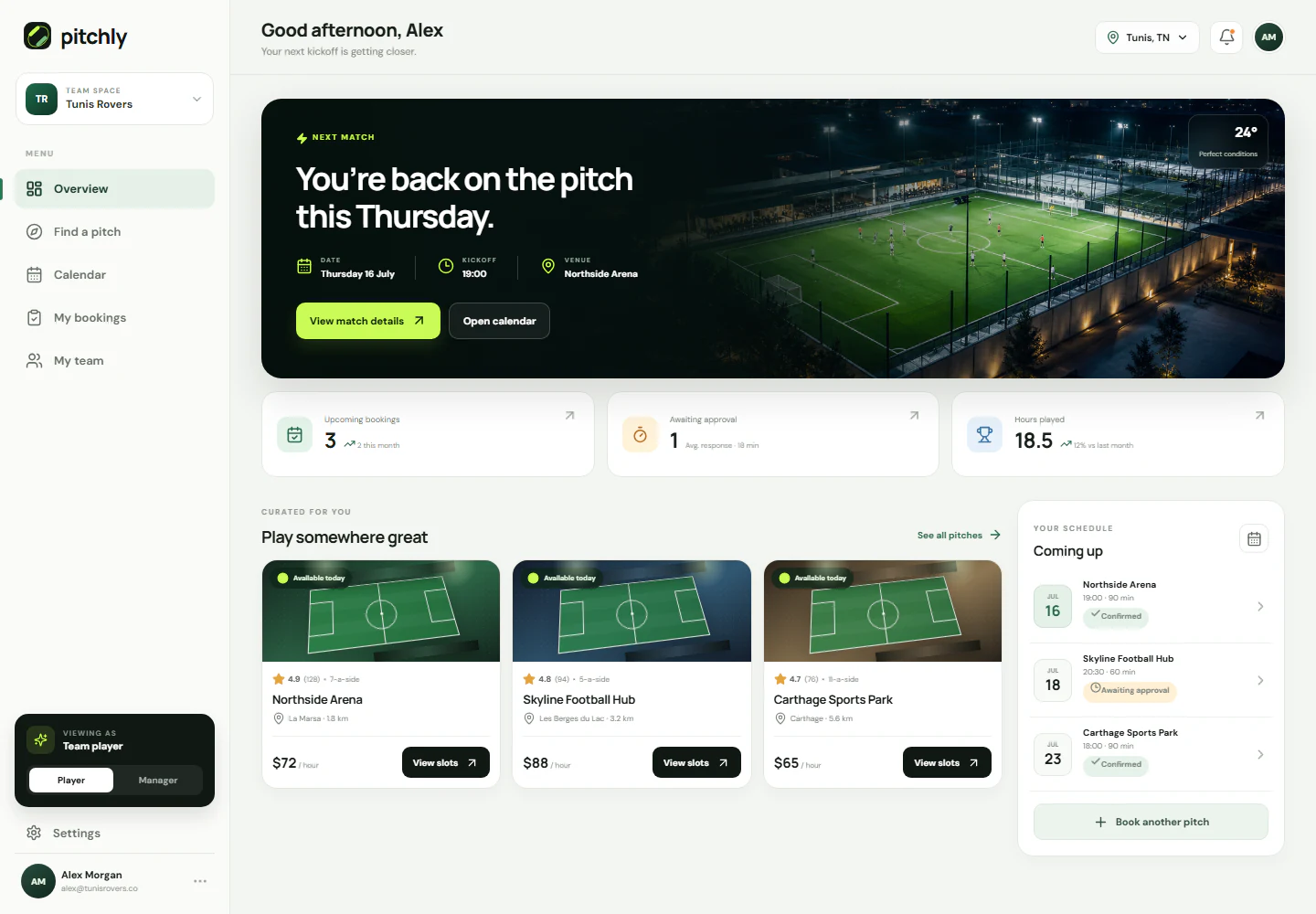
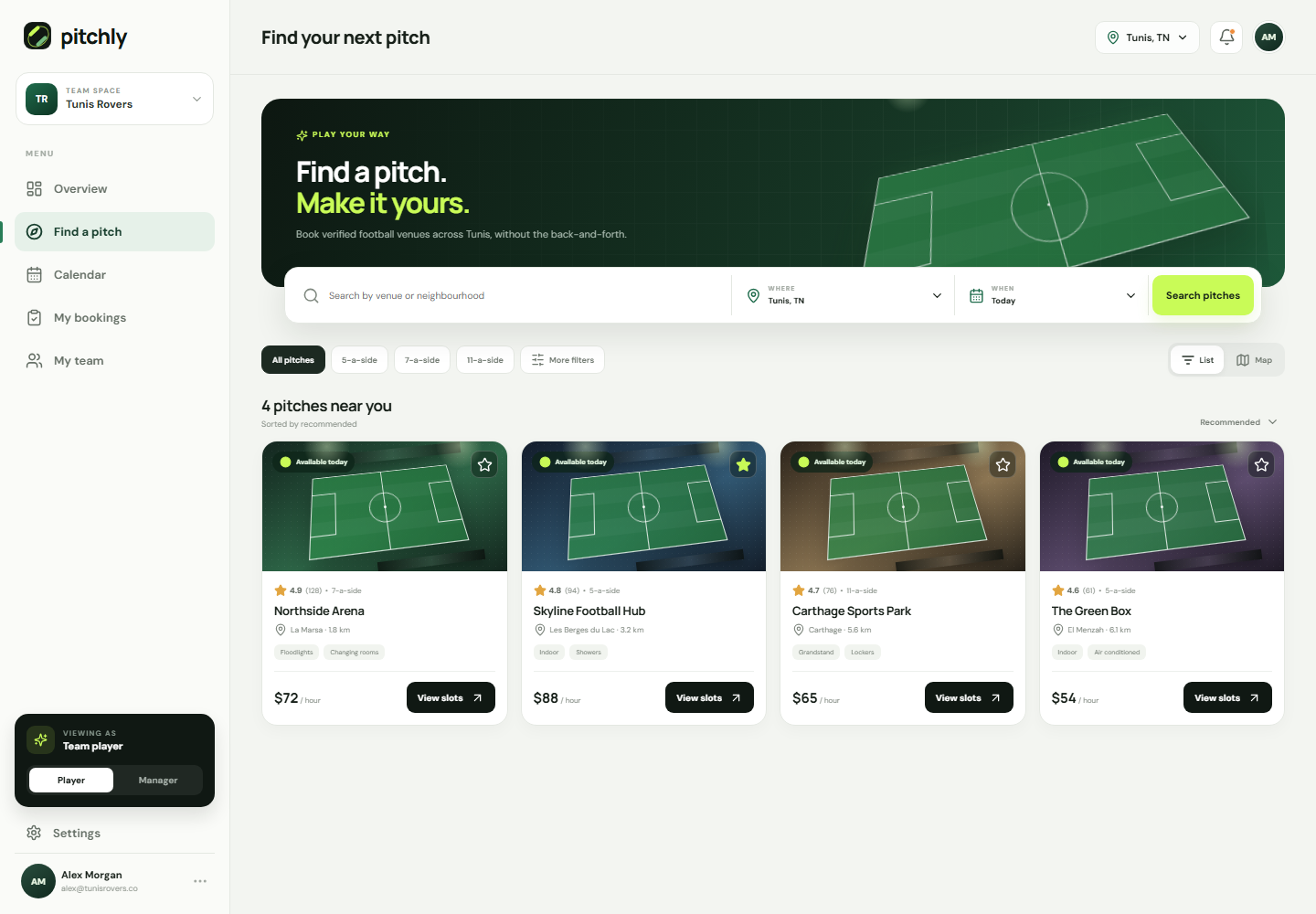
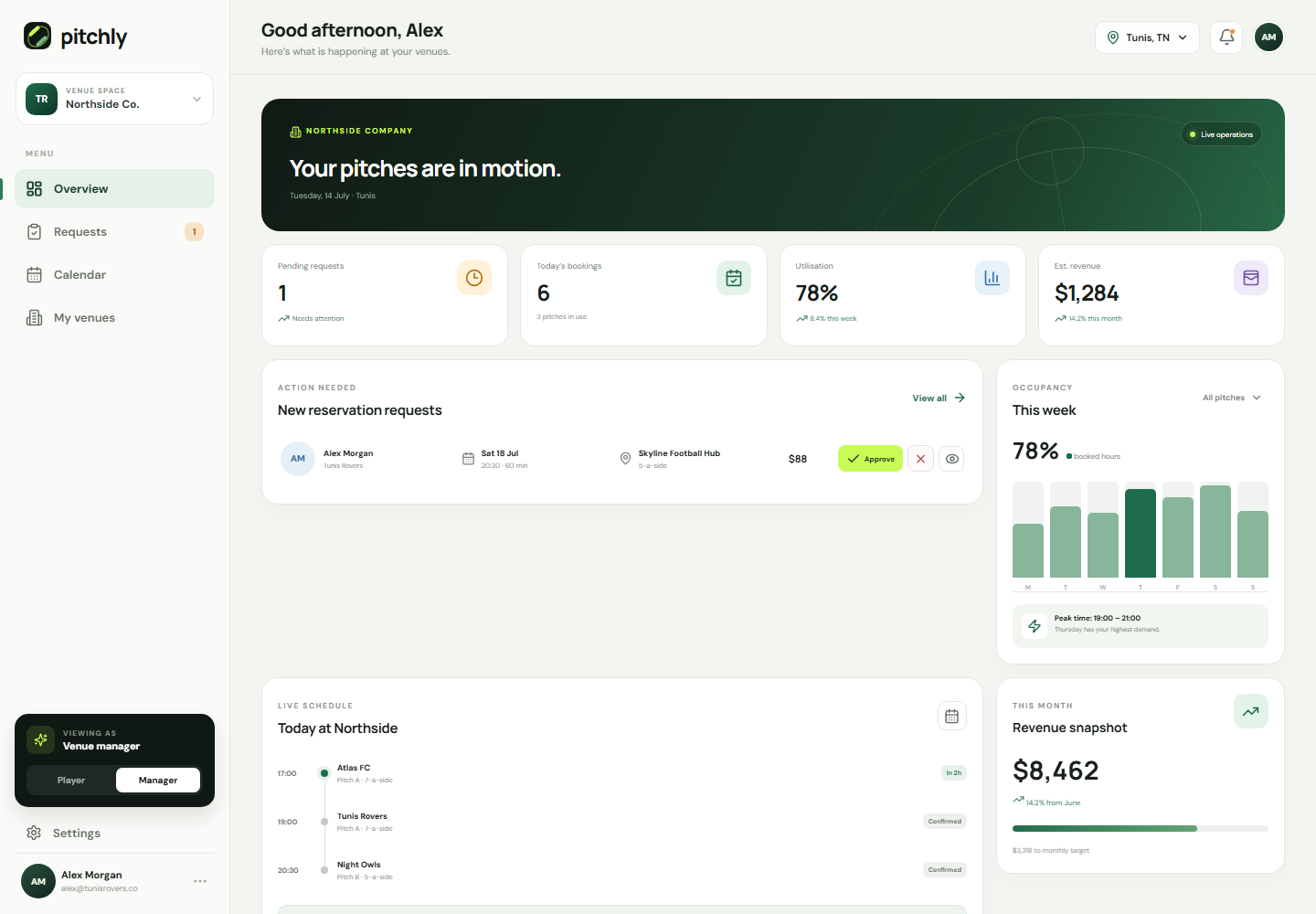
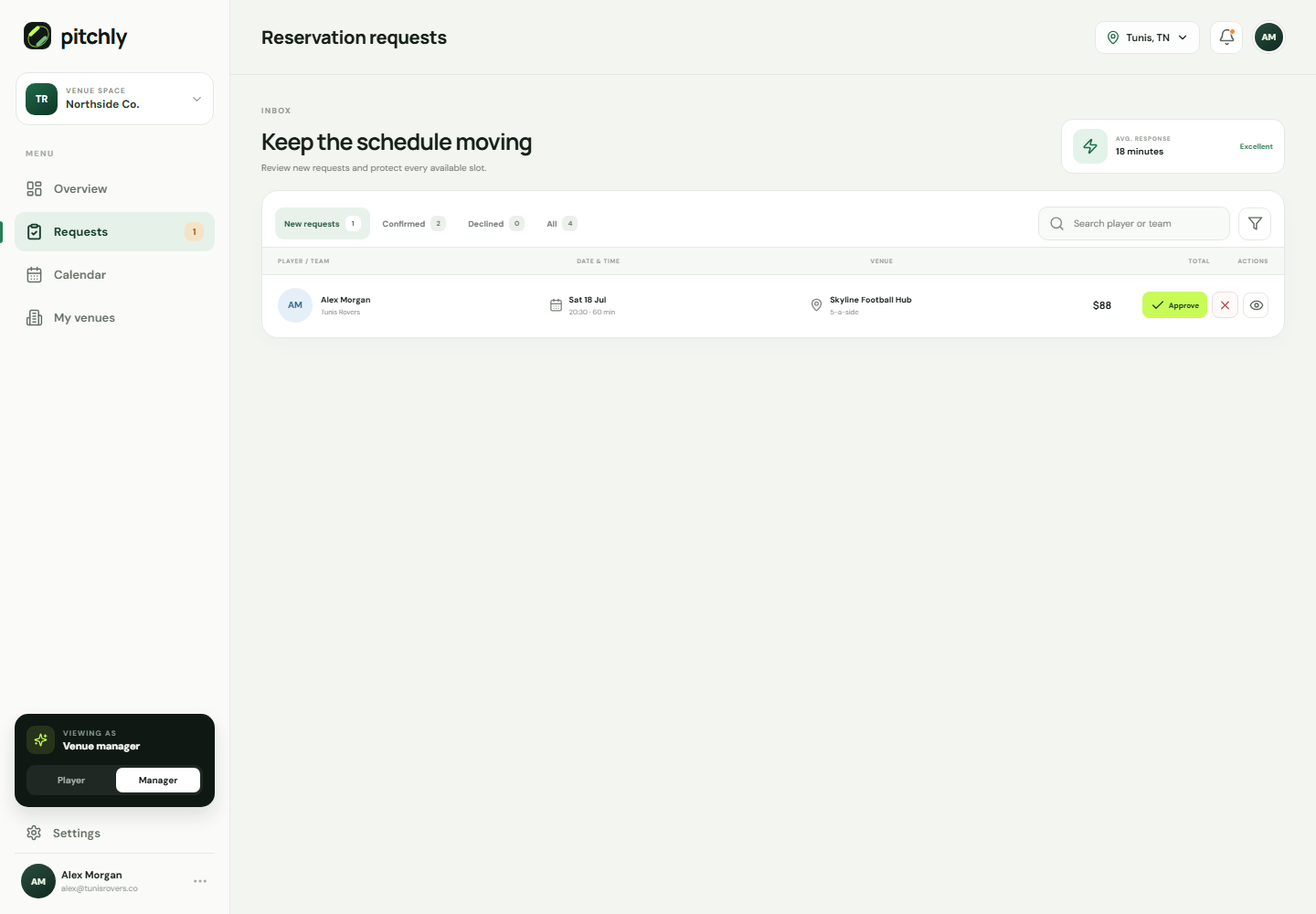
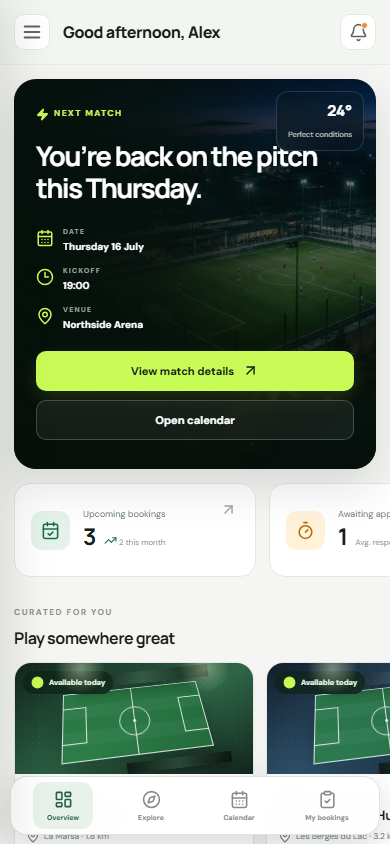
Player and manager views needed to read as different tools while remaining consistent about status and schedule.
Calendars, status details, teams, and approval actions required responsive information prioritization.
Authentication, payments, concurrency, and server-side slot locking are defined as the next service-integration milestone.
Open a technology to see its role in this project.
Player and manager workspaces
Typed venues, bookings, roles, and states
Development and production build pipeline
Consistent interface iconography
Shared reservation state across both demo roles
Direct role and page entry for reviewable flows
Desktop, tablet, and mobile navigation patterns
Both marketplace demand and supply workflows operate inside the same product system.
Pending, confirmed, declined, completed, and cancelled states shape the relevant actions and messaging.
Desktop, tablet, and mobile layouts support both role families without reducing the demo to a dashboard image.
Add production identity, payments, concurrency, and server-side slot locking.