Why it exists
Connect workforce administration and employee attendance while keeping permissions and work-mode decisions under server control.
2026 / Project case study
Secure Workforce Operations & Mobile Attendance
A role-aware workforce platform connecting company administration, HR, leadership, payroll, employee self-service, and server-authorized Android attendance.
In development · Deployment-ready web, API, database, and mobile source; tested preview APK; recovery tooling; and company-facing handoff material.
Connect workforce administration and employee attendance while keeping permissions and work-mode decisions under server control.
Designed and engineered the web platform, Android attendance companion, shared API, delivery checks, and recovery procedures for Genius PMO.
Deployment-ready web, API, database, and mobile source; tested preview APK; recovery tooling; and company-facing handoff material.
See the next milestoneI designed and engineered LeadX HRMS for Genius PMO as one source of truth for workforce operations. The responsive web platform and focused Android companion share a FastAPI and PostgreSQL backend that owns identity, scoped permissions, workflow state, attendance decisions, and audit history. The result moved beyond a prototype into a deployment-ready source handoff with automated checks, reproducible delivery, backup and recovery procedures, and a physically tested preview APK.
Workforce platform for Genius PMOCompany controls, organization setup, employee lifecycle, schedules, leave, documents, equipment, requests, reports, and audit history share one operational model.
Department Managers and Team Leads receive only their assigned department or project context, without broader HR access.
Payroll receives a minimum-data preparation view while employees manage only their own profile, requests, documents, payslips, and attendance.
Additional responsibilities are additive and explicitly scoped, so people do not need duplicate accounts to move between authorized workspaces.
Schedules and leave affect attendance; attendance and adjustments feed payroll; decisions create notifications, reports, and audit history.
English and French, light and dark themes, responsive layouts, reduced motion, keyboard-aware dialogs, and focused system states support daily use.
The backend derives identity, schedule, leave, work mode, and attendance state before it accepts a Check In or Check Out.
Office mobile attendance fails closed unless the backend resolves the client inside an active, audited Office CIDR approved from Company Settings.
Production images, migrations, configuration checks, health endpoints, CI, matched backups, restore guidance, source exports, and a tested preview APK support company deployment.
The web platform and Android attendance companion share backend-owned identity, permissions, work-mode rules, and attendance records.
A responsive Next.js application and the LeadX Attendance Android companion share one backend and one database. FastAPI owns authentication, authorization, operational transitions, attendance decisions, and persistence rather than trusting the clients.
The product separates presentation from backend-owned security and business rules. Signed HttpOnly web sessions and protected mobile bearer sessions reach the same API, while production configuration validates trusted hosts, origins, cookies, proxy boundaries, and required secrets.
The employee cannot choose a different work mode in the app. Remote uses the normal public HTTPS API, External Site stays mobile-only, and Office stays mobile-only with backend-resolved approved-network verification. Leave and Not Scheduled remain blocked.
The company handoff includes exact-commit source exports, production containers, explicit migration steps, a tested preview APK, configuration guidance, and a matched PostgreSQL and upload backup with verification and restore procedures.
Actual project screens and documented visuals. Open any image for the full view.
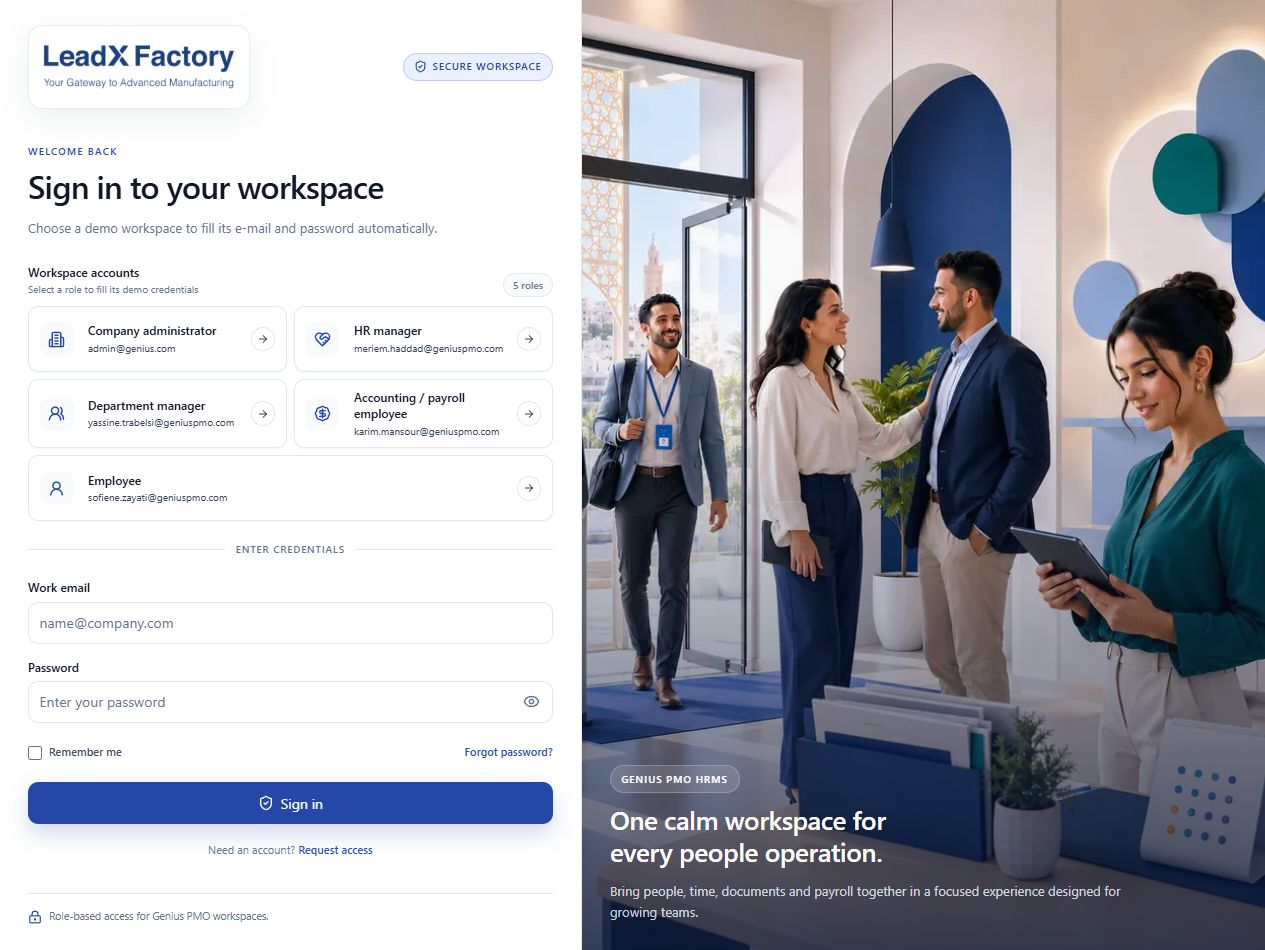
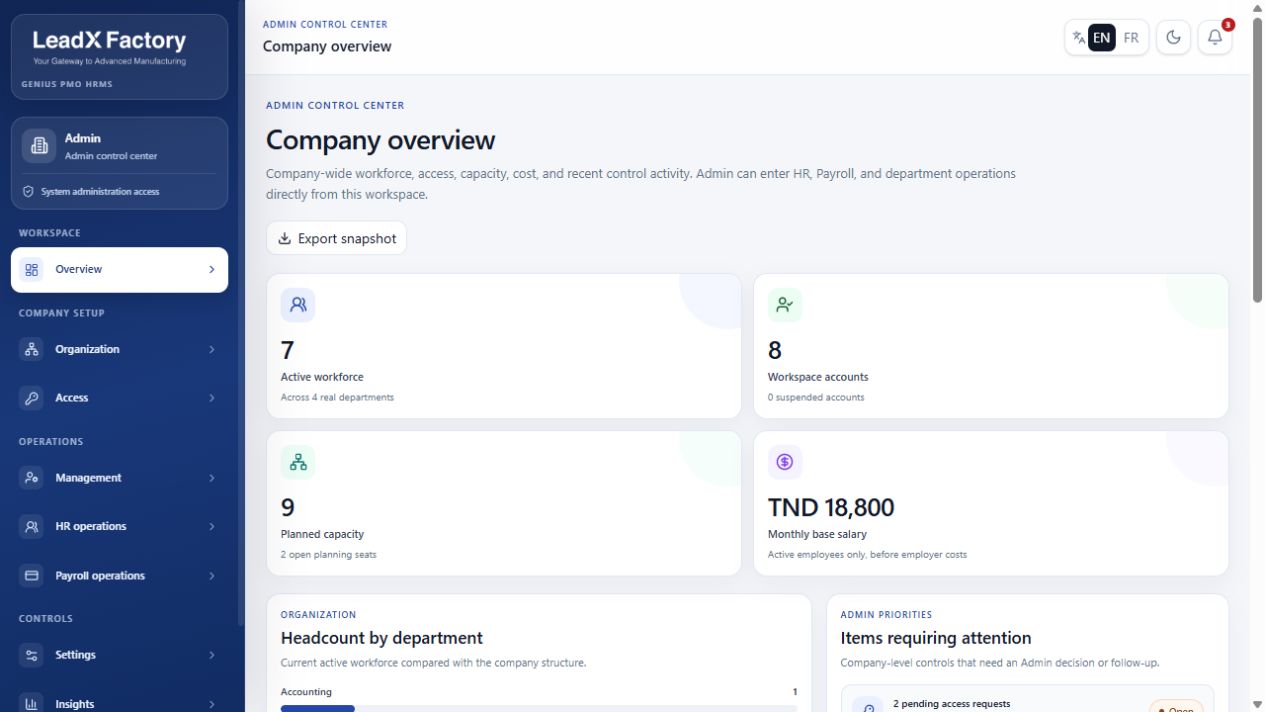
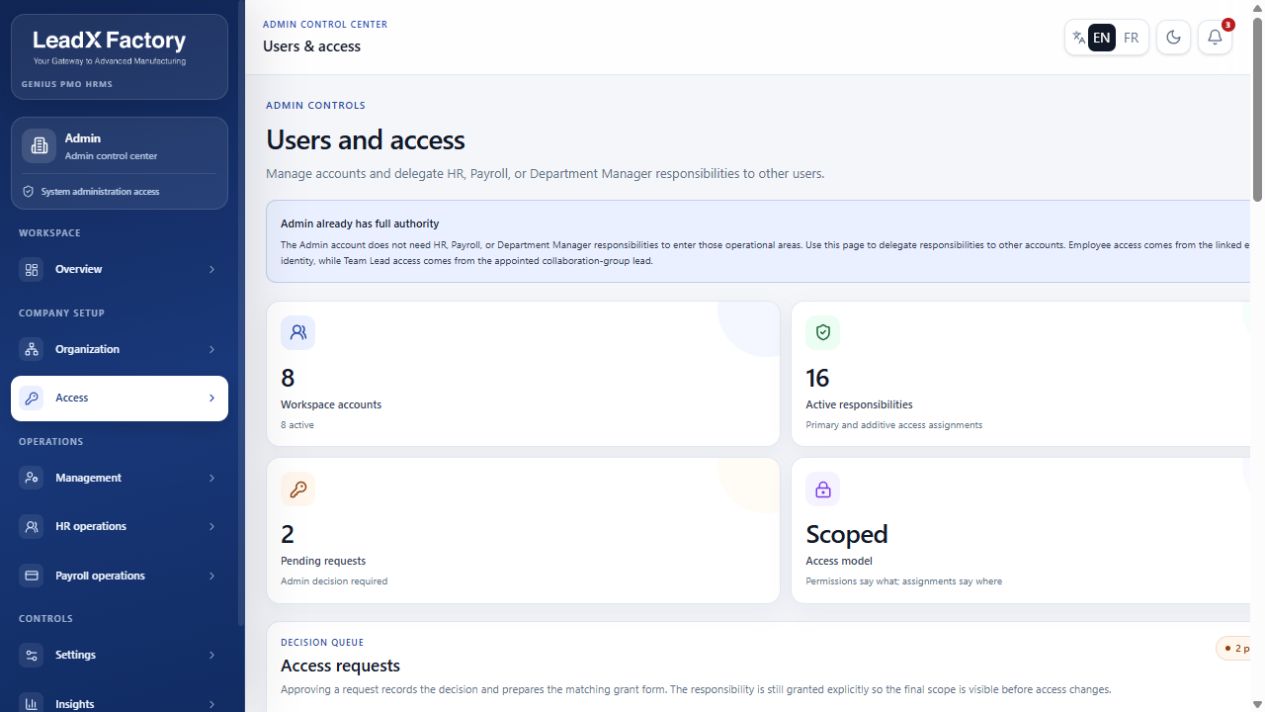
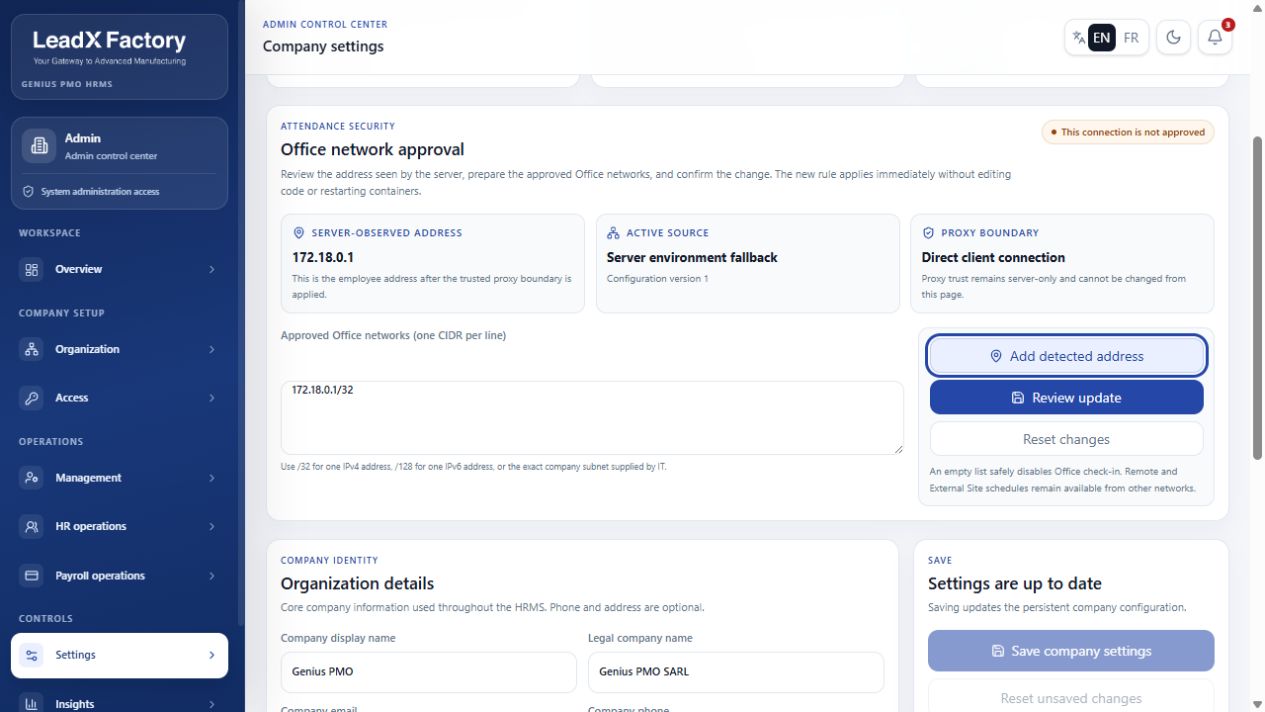
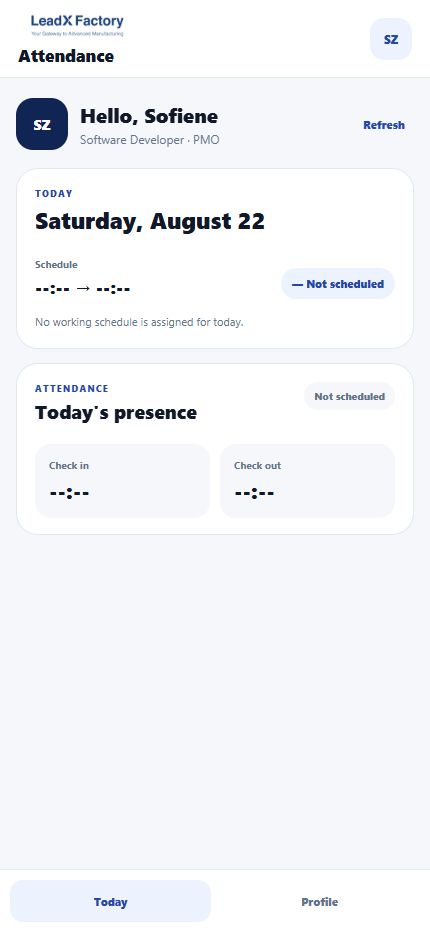
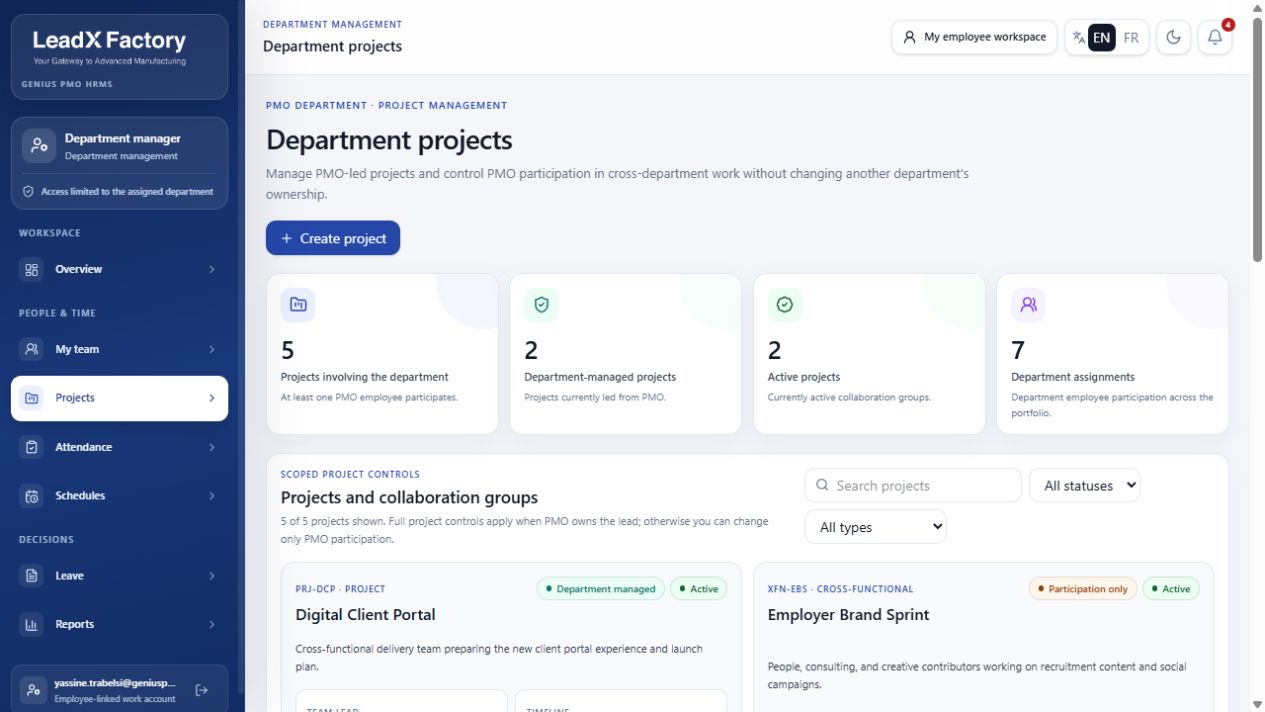
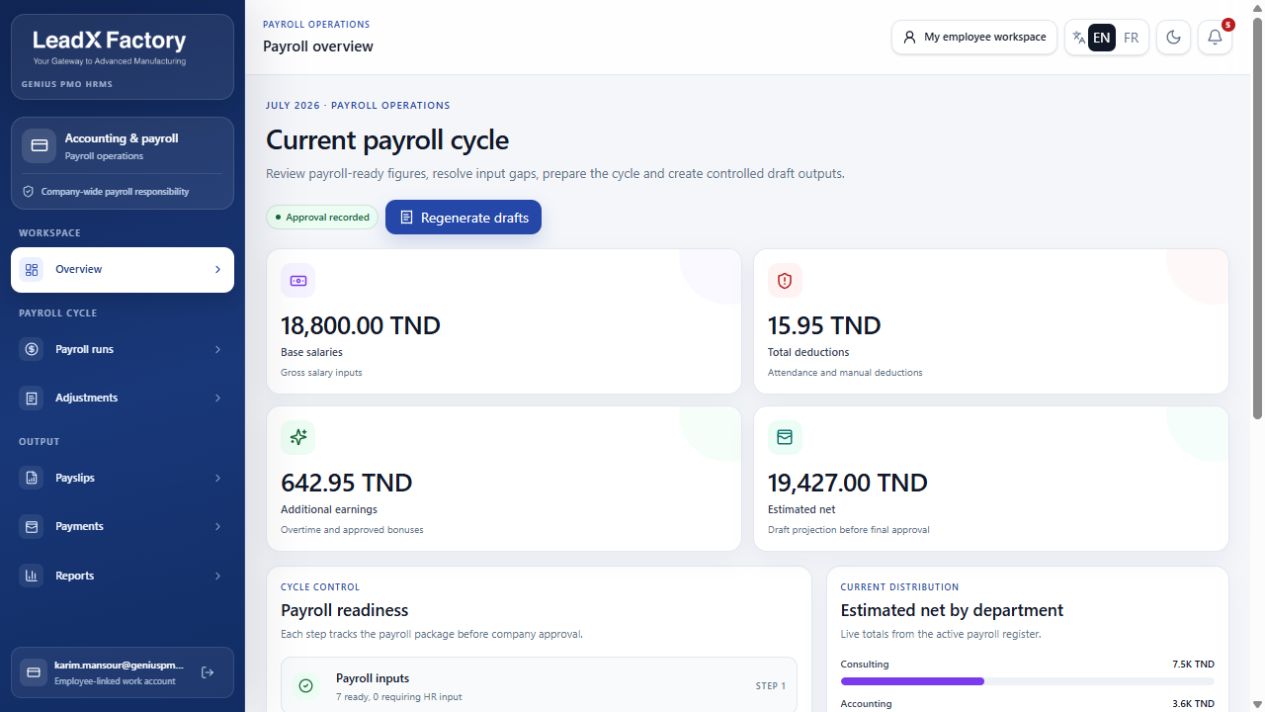
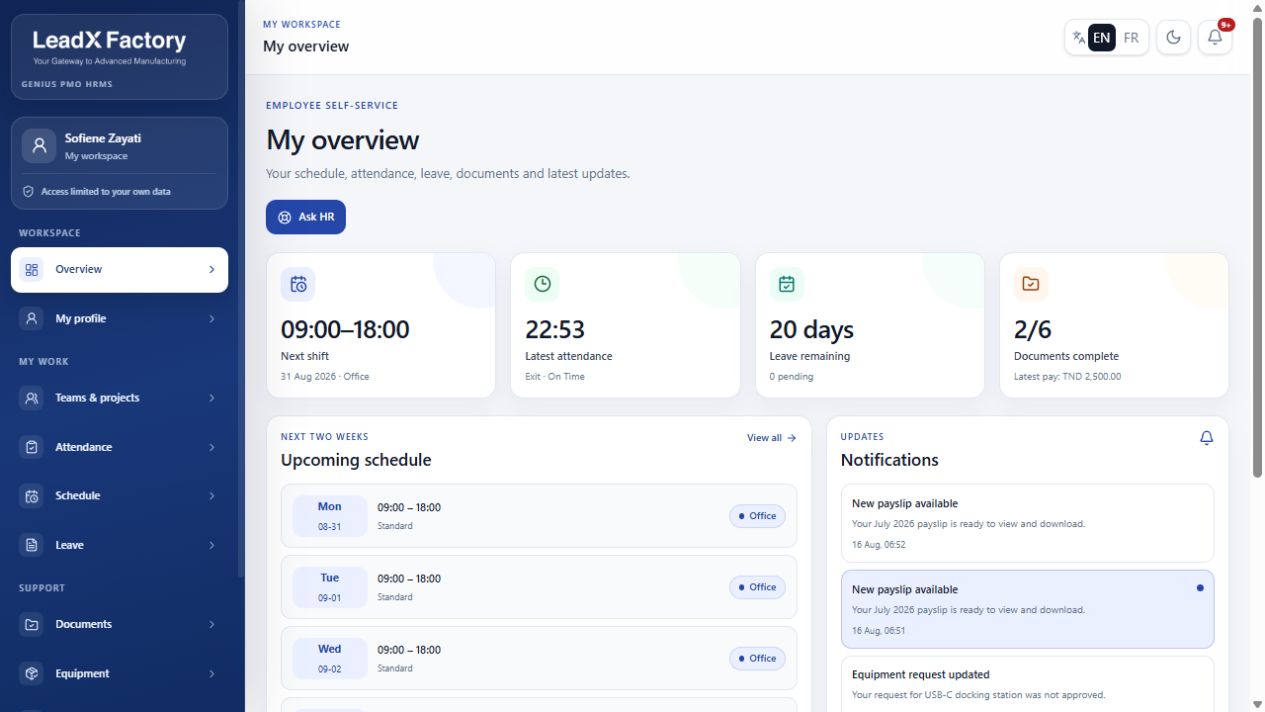
Company, department, project, payroll, and personal responsibilities needed different navigation and minimum-data projections while still sharing one employee identity and one operational source of truth.
The web and Android interfaces needed clear actions, but only the backend could safely derive the employee, assigned work mode, schedule, leave, network eligibility, duplicate state, and valid transition.
Persistent data, safe migrations, fail-closed production configuration, repeatable Android builds, automated checks, matched backups, and company-facing recovery guidance were delivery requirements rather than later polish.
Open a technology to see its role in this project.
Responsive role-aware web application
Interactive operational workspaces
Typed client contracts and workflows
Android application and build workflow
Focused attendance companion
Protected mobile bearer-session storage
Reproducible preview and production builds
Authentication, authorization, rules, and workflow transitions
Backend application runtime
Persistent operational source of truth
Asynchronous data access
Versioned database migrations
Web, API, and database orchestration
Automated quality and build checks
Chromium workflow regression coverage
Python quality checks
Matched database and upload recovery packages
The final HRMS revision passes the verified backend test suite.
Chromium regression coverage spans Employee, Team Lead, Department Manager, HR, Payroll, and Admin responsibilities.
The responsive web platform and Android attendance companion share one backend, database, identity model, and attendance record.
Add the company HTTPS API URL, DNS/TLS, production secrets, database settings, and exact Office/proxy networks, then rebuild the final Android release.


